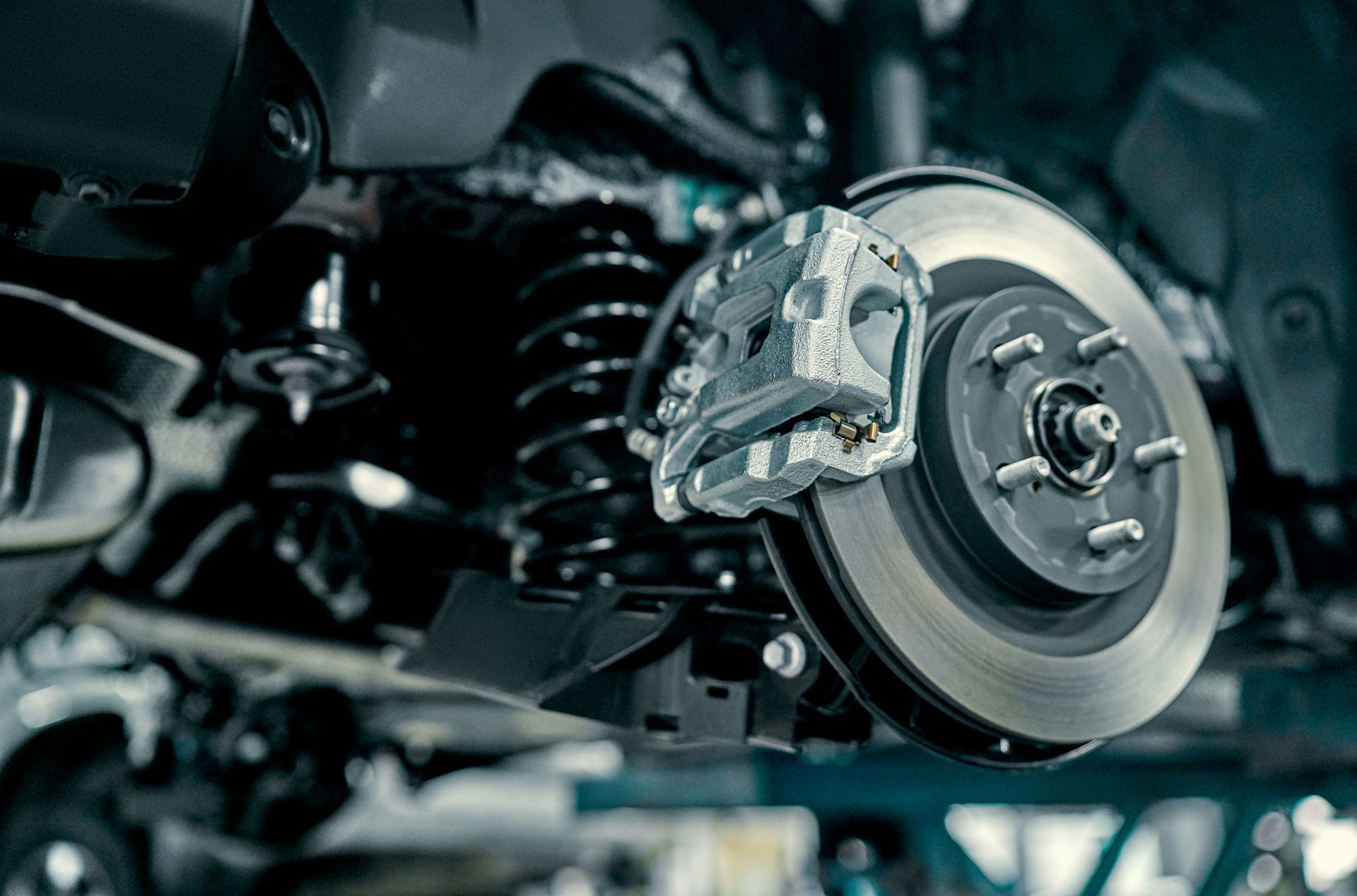
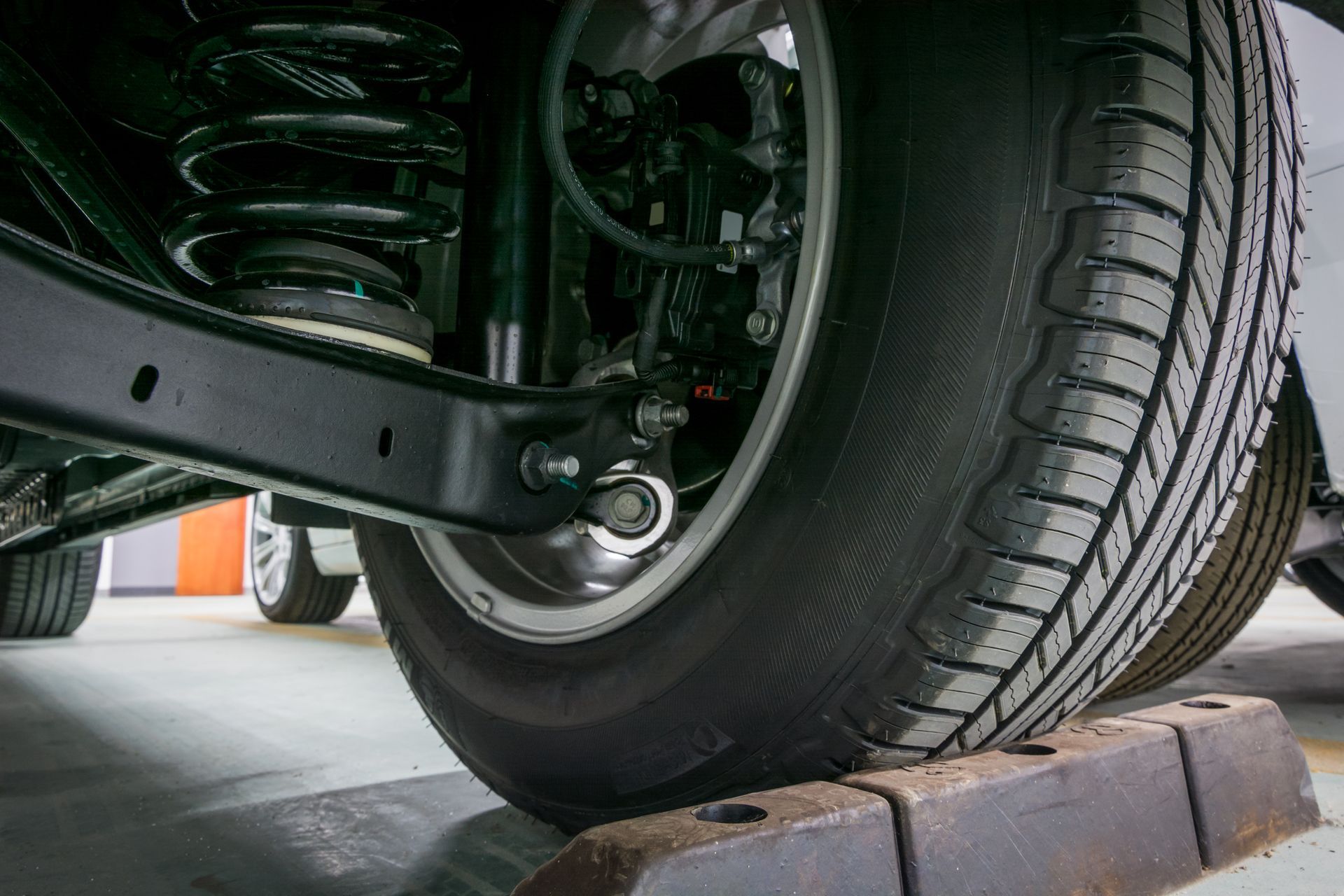
Suspension springs are easy to forget because they usually do not make much noise when they start wearing out. They carry the vehicle's weight every mile you drive, and over time they can lose some of the height and strength they had when new.
A sagging spring changes more than the way the vehicle sits. It affects suspension travel, alignment angles, tire wear, and how the car reacts to bumps. At our shop, we look at ride height, spring condition, and the surrounding suspension before deciding a spring has actually weakened.
One Corner Sits Lower Than the Others
A vehicle that sits noticeably lower at one corner deserves a closer look. We measure ride height on level ground and compare side to side rather than judging it only by eye.
A weak coil spring can let one corner settle lower, especially after years of carrying weight and absorbing road impacts. On trucks and SUVs, rear springs also take a beating from cargo, towing, and repeated heavy loads.
Not every low corner is caused by the spring itself. A damaged spring seat, bent suspension part, overloaded vehicle, or failed air-suspension component can create a similar stance. Measurements help us separate an actual spring problem from something else underneath the vehicle.
The Rear of the Vehicle Can Start Drooping
Rear spring sag is common on vehicles that spend years carrying tools, equipment, passengers, or heavy cargo. You might notice the rear sitting lower than it used to, even when the cargo area is empty.
The headlights can point higher at night because the front of the vehicle is now sitting higher in relation to the rear. The rear suspension can also hit its bump stops more easily when you drive over dips or load the vehicle.
Installing stronger shocks will not correct this. Shocks control movement, but the springs hold the vehicle up. If the springs have lost height, replacing the dampers alone does not restore the correct ride height.
Broken Coil Springs Can Be Hard to See
A spring does not have to sag gradually. Coil springs can also break, often near the top or bottom where the final coil sits against the spring seat.
Dirt, rust, or the shape of the suspension can hide that break. We have seen vehicles come in for a tire noise or uneven stance and find the bottom section of a coil already broken off.
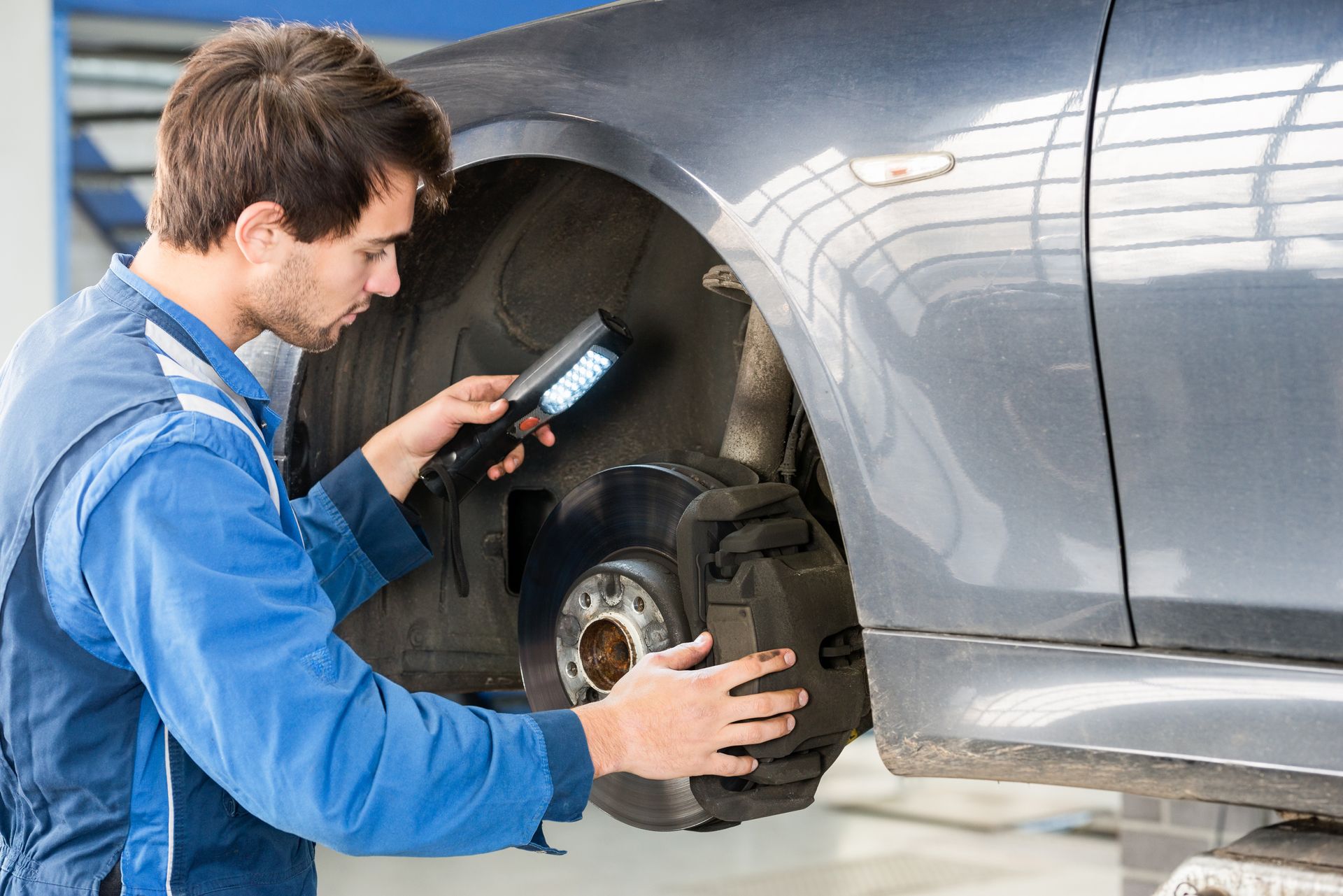
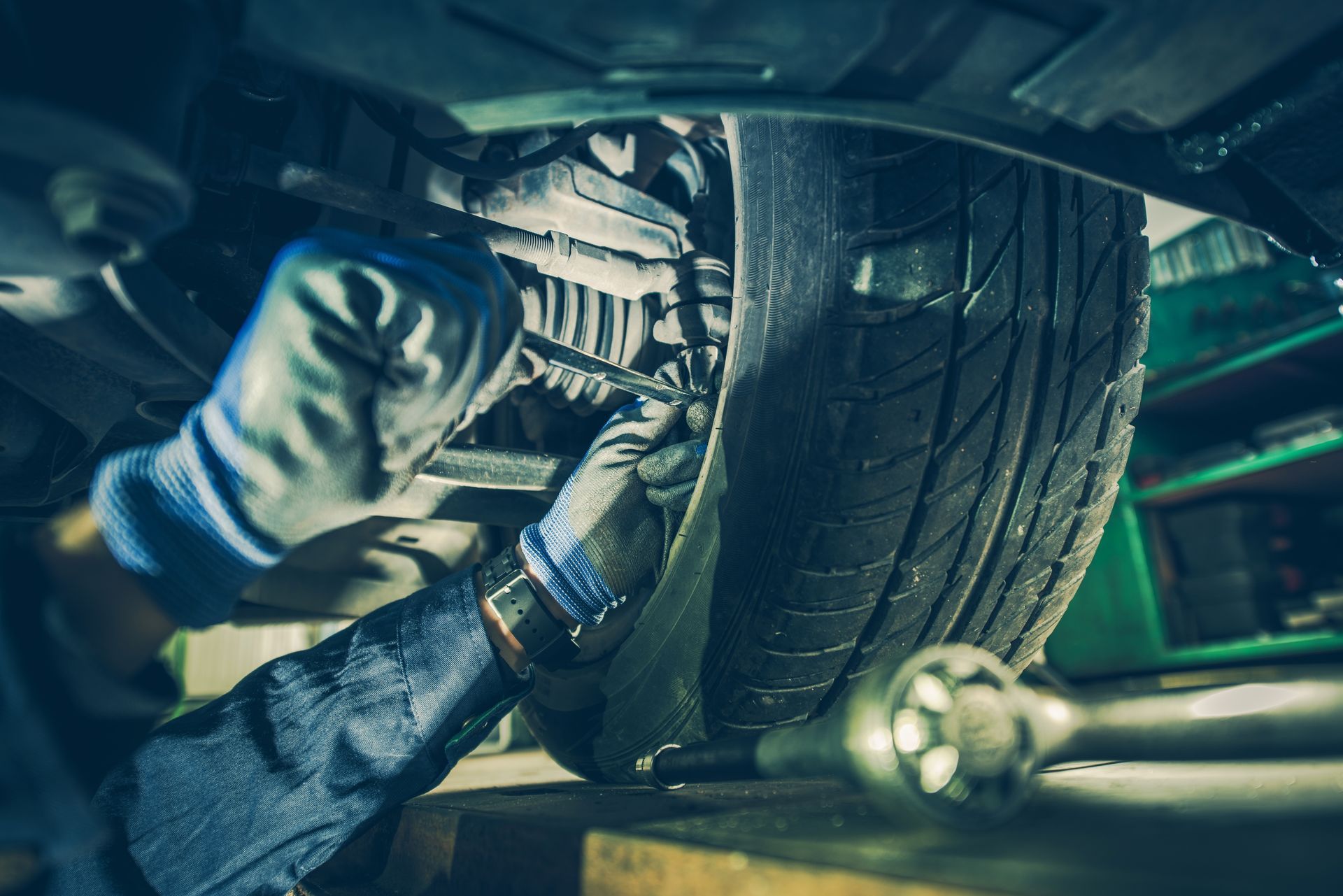
Sometimes the driver hears a clunk when turning or going over a bump. Other times there is no obvious noise at all. During an inspection, we look around the entire spring and check that both ends are seated correctly.
Uneven Tire Wear Can Follow a Change in Ride Height
Suspension geometry is designed around a particular ride height. When a spring sags, the control arms and wheels sit at a different angle than intended.
That can change camber and toe enough to cause uneven tire wear. You might see excessive wear along an inner shoulder even though the vehicle still seems to drive reasonably straight.
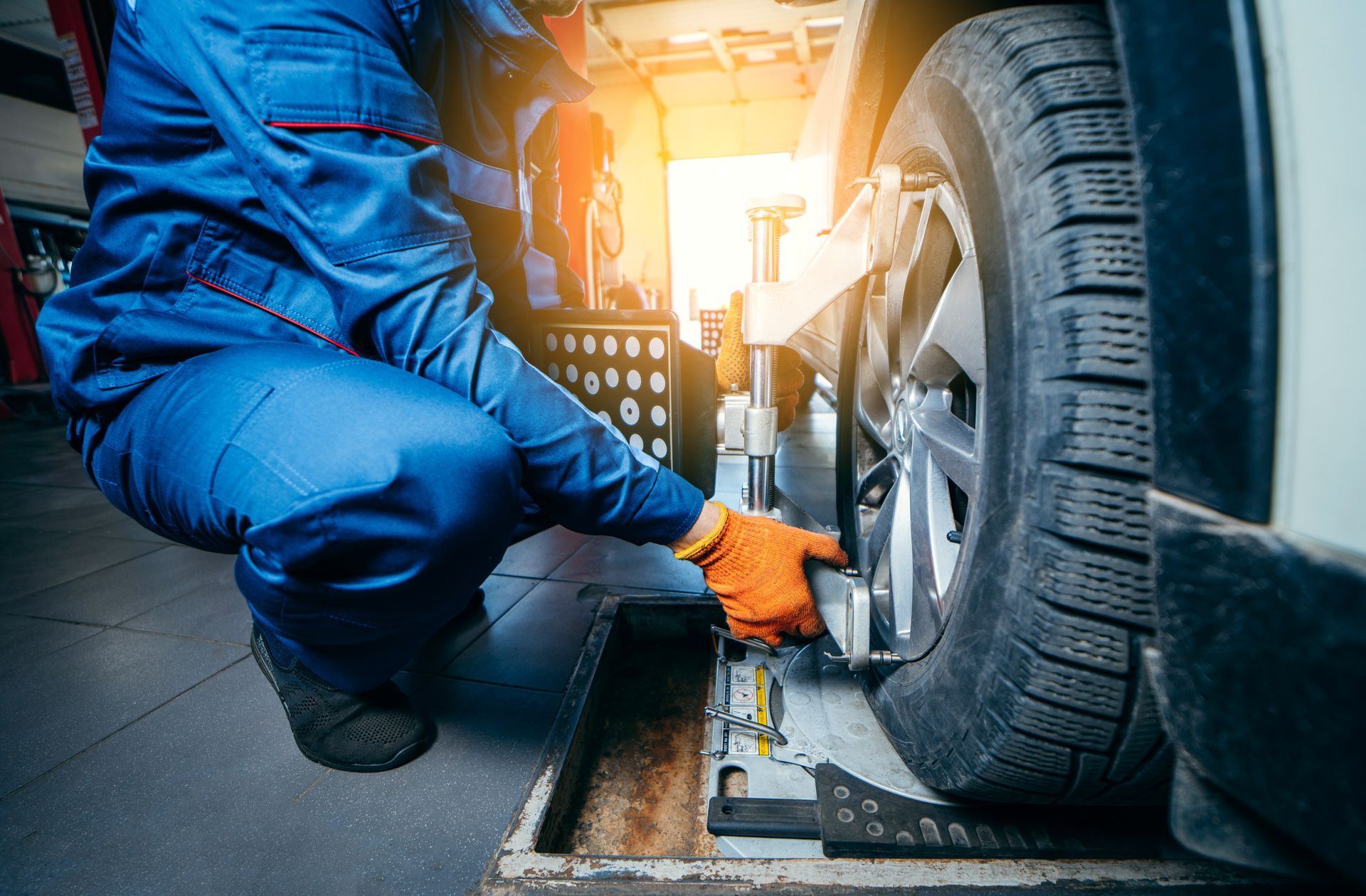
An alignment can correct certain angles, but only up to a point. If the vehicle is sitting too low because of a weak spring,
aligning it without repairing the spring leaves the suspension geometry working from the wrong position. We correct the mechanical problem first, then align the vehicle if needed.
Frequent Bottoming Out Is Another Strong Clue
The spring supports the vehicle and gives the suspension room to move. As it loses height, there is less travel available before the suspension reaches the bump stop.
You can feel this as a hard impact over dips, driveway entrances, railroad crossings, or larger bumps. The vehicle feels like it runs out of suspension travel instead of absorbing the hit normally.
A worn shock or strut can make the suspension move too much, so we check those parts as well. The difference is that a weak damper does not normally make the vehicle sit lower at rest. A sagging spring does.
Do Not Replace Springs Based on Mileage Alone
There is no universal mileage where suspension springs need replacement. Some last the life of the vehicle. Others weaken sooner because of corrosion, heavy loading, rough roads, or damage.
What matters is what the spring is doing now. Ride-height measurements, broken coils, excessive sag, bottoming out, and alignment problems give us much better information than the odometer.
When one spring has clearly weakened from age, replacing springs in pairs on the same axle is often the better approach. That keeps ride height and spring rate more consistent from side to side. We also check spring seats, isolators, shocks or struts, and nearby suspension hardware while everything is apart.
Regular maintenance gives us a chance to catch changes before the vehicle develops severe tire wear or starts riding on the bump stops.
Get Suspension Spring Service In Texas, With Cruz-N-Carz
If your vehicle is sitting low, leaning to one side, bottoming out, or wearing its tires unevenly,
Cruz-N-Carz can inspect the springs and related suspension components at either of its Pearland, TX locations.
Schedule a suspension check and find out whether the springs have actually lost height or another suspension problem is causing the change.